Custom Inground Concrete Pools: What Chicago Suburbs Homeowners Should Know
A custom inground concrete pool gives homeowners the freedom to design the pool around the property instead of choosing from a fixed set of shapes and sizes. For Chicago suburbs families, that flexibility matters because lot dimensions, setbacks, patios, drainage, landscaping, outdoor living space, and local permitting can all influence the final design.
Sunset Pools & Spas specializes in custom concrete inground pools built around how each family wants to swim, relax, entertain, and use the backyard. The goal is to create a well-engineered outdoor space that looks intentional, operates efficiently, and complements the home.
Key Takeaways
- Concrete offers exceptional design flexibility for custom shapes, depths, steps, benches, tanning ledges, spas, water features, and finishes.
- Chicago suburbs pool projects require local planning around surveys, setbacks, access, drainage, permits, inspections, and seasonal construction conditions.
- The best pool design starts with how you will use it, then matches size, depth, features, equipment, and patio space to those priorities.
- Long-term ownership should be considered from the start through thoughtful hydraulics, equipment selection, safety planning, maintenance access, and winterization.
What Is a Custom Inground Concrete Pool?
A custom inground concrete pool is a site-built pool whose structural shell is formed around the specific design of the property. Steel reinforcement, plumbing, and a sprayed-concrete shell create the base structure, which can then be completed with tile, coping, an interior finish, and surrounding hardscape.
Homeowners often use the terms gunite pool and concrete pool interchangeably, but the terminology is more precise. The American Shotcrete Association explains that shotcrete is the broader term for pneumatically applied concrete, while gunite refers specifically to the dry-mix shotcrete process.
The practical advantage for homeowners is customization. A concrete shell can be shaped around the yard, the architecture of the home, and the features you want to integrate instead of requiring the backyard to accommodate a pre-manufactured shell.
Why Choose a Custom Inground Concrete Pool?
Concrete is a strong fit when design flexibility, architectural integration, and long-term adaptability are priorities. Sunset focuses on custom concrete inground pools and spas because the construction method supports highly personalized backyard plans.
- Shape and size: Rectangular, geometric, freeform, Roman, L-shaped, compact, oversized, and site-specific layouts are possible.
- Depth and swim zones: Depths can be planned around family play, lounging, exercise, deeper-water use, or several activities.
- Integrated features: Tanning ledges, benches, steps, attached spas, water features, lighting, and automatic covers can be incorporated into the design.
- Finish flexibility: Waterline tile, coping, interior finish, decking, and landscape materials can be coordinated with the home.
- Future updates: Concrete pools can be resurfaced and renovated as finishes, equipment, or backyard preferences change.
If you are still comparing shapes and layouts, Sunset’s guide to custom inground pool designs for Chicago suburbs shows how different configurations can work with suburban properties.
Which Concrete Pool Design Fits Your Backyard?
The best custom pool is not necessarily the largest pool your yard can hold. A successful layout should leave enough room for circulation, seating, shade, landscaping, equipment access, and the outdoor living features your family will actually use.
| If your priority is… | Consider… | Why it can work |
|---|---|---|
| Family play and everyday swimming | A geometric or freeform pool with broad steps and a usable shallow zone | Keeps the layout flexible for kids, adults, and casual entertaining. |
| Relaxing and entertaining | A tanning ledge, integrated spa, benches, lighting, and generous patio space | Creates multiple places to gather without relying on the swim area alone. |
| Fitness or lap swimming | A longer rectangular design with an unobstructed swim path | Prioritizes usable length and a clean swimming route. |
| A smaller or irregular yard | A compact custom shape designed around setbacks, access, and existing features | Allows the pool footprint to respond to the property rather than a preset shell. |
| A resort-style backyard | Integrated spa, water feature, upgraded finish, lighting, and coordinated hardscape | Helps the pool, patio, landscape, and home read as one cohesive design. |
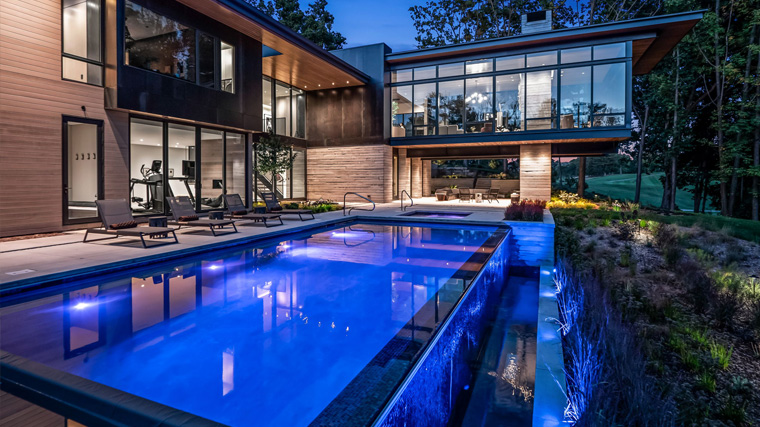
What Makes Building a Concrete Pool in the Chicago Suburbs Different?
Chicago-area pool design has to account for more than aesthetics. Property surveys, municipal setbacks, utilities, equipment placement, excavation access, drainage, fencing, inspections, and seasonal weather can all shape the project before construction begins.
Permit requirements and review timelines vary by municipality, so those requirements should be identified early and incorporated into the schedule. If your goal is to swim by a specific date, review Sunset’s month-by-month Chicagoland pool construction timeline before choosing your target start date.
The Midwest swim season also makes convenience and efficiency especially valuable. Heating strategy, automatic covers, automation, lighting, and integrated spas can help homeowners get more practical use from the backyard beyond peak summer.
What Does the Concrete Pool Construction Process Look Like?
A custom pool project is easier to manage when design and construction decisions happen in a clear sequence. Sunset’s inground pool construction process moves from site review and design through permits, structural construction, finishes, equipment setup, startup, and homeowner orientation.
- Discovery and site review: Define how the pool will be used and review access, grading, drainage, setbacks, and existing outdoor features.
- Design and engineering: Finalize the footprint, depth profile, steps, benches, spa, features, equipment strategy, and surrounding layout.
- Permits and approvals: Work through municipality-specific reviews, inspections, and required revisions.
- Structural construction: Excavate the pool, install steel reinforcement and plumbing, and construct the concrete shell.
- Tile, coping, decking, and finish: Complete the materials that define the finished look and feel.
- Equipment, startup, and walkthrough: Commission the pool systems and review operation and care.
Interior finish selection deserves attention because it affects water color, texture, appearance, and future resurfacing decisions. Sunset’s comparison of plaster, quartz, pebble, and tile pool finishes can help narrow the options before selections are finalized.
What Drives the Cost of a Custom Inground Concrete Pool?
There is no useful one-price answer for a truly custom concrete pool. Total project cost is shaped by size, depth, geometry, site access, excavation conditions, structural requirements, spa integration, decking, finish materials, equipment, lighting, water features, automatic covers, drainage, retaining needs, and related backyard improvements.
A smaller, well-planned pool can make more sense than a larger pool filled with features your family rarely uses. A smart budgeting approach separates must-haves from nice-to-haves early while protecting structural, plumbing, safety, and equipment decisions that would be difficult to change later.
Are Concrete Pools Difficult to Maintain?
A concrete pool requires regular water chemistry management, cleaning, equipment checks, seasonal opening and closing in Chicagoland, and periodic finish care. Modern automation and cleaning systems can reduce hands-on work, but no inground pool is maintenance-free.
Equipment selection also affects the ownership experience. ENERGY STAR notes that variable-speed pool pumps can match pump speed to different functions instead of operating at one high speed for every task, reducing unnecessary energy use. Homeowners who prefer professional help can also explore Sunset’s pool maintenance services.
How Should Safety Be Planned Into a Custom Pool?
Pool safety should be part of the initial layout, not an accessory added after construction. Barrier locations, gates, covers, steps, lighting, visibility from the home, deck circulation, and equipment placement should be considered while the backyard is being designed.
The U.S. Consumer Product Safety Commission recommends layers of protection around residential pools, including barriers and self-closing, self-latching gates. Local requirements can be more specific, so the final safety plan must comply with the municipality where the pool is built.
Why Work With Sunset Pools & Spas?
Sunset Pools & Spas is a family-owned company with 17+ years of experience designing and building custom concrete pools and spas. The team handles the major phases from design and permit coordination through construction, with an emphasis on engineering, craftsmanship, clear communication, efficient operation, and long-term serviceability.
That start-to-finish approach is especially valuable for suburban homeowners who want a high-quality custom result without managing disconnected contractors. You can explore Sunset’s pool project gallery to see how different pool shapes, spas, finishes, water features, and backyard layouts come together.
Ready to Plan Your Custom Inground Concrete Pool?
A custom concrete pool should fit your property, your family, and the way you want to live outside—not force you into a standard template. The right planning process connects design, engineering, permits, construction, safety, equipment, and long-term ownership before excavation begins.
If you are considering a custom inground concrete pool in the Chicago suburbs, schedule a free consultation with Sunset Pools & Spas. The team can review your goals, property, preferred features, and timing to help turn your backyard ideas into a practical plan.
Custom Inground Concrete Pool FAQs
Are concrete pools and gunite pools the same thing?
Gunite is one method of building a concrete pool, but the terms are not technically identical. Shotcrete is the broader term for sprayed concrete, while gunite refers specifically to dry-mix shotcrete. Homeowners often use “gunite pool” as shorthand for a custom concrete pool.
How long does it take to build a concrete pool in the Chicago suburbs?
The full timeline depends on design, permitting, weather, site conditions, inspections, and project complexity. Chicago suburbs homeowners should plan well ahead of their target swim season because design and municipal approvals can add meaningful time before construction begins.
Can a custom concrete pool fit a small or irregular backyard?
Yes, custom concrete construction is especially useful for smaller or irregular properties because the pool shape can be designed around the site. Setbacks, utilities, access, drainage, patio needs, and local rules still determine how much of the yard can actually be used.
What affects the cost of a custom inground concrete pool?
Pool size, depth, shape, access, site conditions, finishes, spa integration, decking, equipment, lighting, covers, water features, drainage, and structural requirements all affect total cost. A realistic budget should cover the full backyard scope rather than only the concrete shell.
Are concrete pools hard to maintain?
Concrete pools require consistent water care and routine maintenance, but modern equipment and automation can make ownership much easier. Chicago-area owners should also plan for seasonal opening, winterization, equipment service, and eventual interior finish maintenance.
Which pool features should be planned before construction?
Structural and infrastructure-heavy features should be planned as early as possible. Integrated spas, tanning ledges, steps, benches, automatic covers, lighting, water features, plumbing, electrical capacity, and automation are easier to coordinate before the shell, deck, and finishes are complete.
When should I start planning a custom pool in the Chicago suburbs?
Start planning as early as possible if you have a specific swim season in mind. Early planning gives more time for design decisions, engineering, municipal permits, material selections, and construction scheduling without forcing rushed compromises.