Can You Build an Inground Pool During Winter in Chicago?
Building an inground pool during winter may sound unrealistic in the Chicago suburbs, but cold weather does not automatically bring pool construction to a stop. An experienced concrete pool builder can often continue with design, permitting, excavation, structural work, plumbing, electrical coordination, and even concrete shell placement when site conditions and proper cold-weather procedures allow.
Winter pool construction still requires a flexible schedule. A responsible builder adjusts the work around frozen ground, snow, moisture, inspections, material requirements, and the temperature limits of each phase.
Key Takeaways
- A custom concrete pool can be built during winter when conditions are monitored and the work is properly protected.
- Design, surveys, permits, selections, and project coordination can move forward even when outdoor construction pauses.
- Excavation, concrete placement, masonry, decking, and finishes may be rescheduled during severe cold, snow, or frozen-ground conditions.
- Winter planning gives Chicago-area homeowners more time to prepare for the next swimming season.
Is Winter Actually a Good Time to Start a Pool Project?
Winter can be a smart time to begin a custom pool project because the complete process involves much more than excavation. Homeowners need time to finalize the pool shape, depth, steps, spa, tanning ledge, equipment, finishes, decking, drainage, utilities, and safety features. A custom concrete inground pool should be designed around the property and the family’s long-term plans rather than rushed to meet a warm-weather deadline.
Winter design and permitting can put a project in a stronger position when consistent construction weather returns. It does not guarantee a Memorial Day opening, but it prevents homeowners from waiting until spring to begin every step.
Which Pool Construction Phases Can Be Completed During Winter?
Different phases of the inground pool construction process respond differently to cold weather. Some tasks are largely unaffected by temperature, while others require dry conditions, unfrozen surfaces, heated enclosures, insulated blankets, or a temporary pause.
| Pool Project Phase | Winter Feasibility | What Homeowners Should Expect |
|---|---|---|
| Design and budgeting | Usually ideal | Layouts, features, equipment, finishes, and priorities can be developed without waiting for warm weather. |
| Survey and permit preparation | Usually possible | Plans can be prepared and submitted while the municipality reviews zoning, drainage, barriers, and trade requirements. |
| Excavation | Condition-dependent | Frozen soil, deep snow, saturated ground, access limitations, and safe equipment operation can affect the dig date. |
| Steel, plumbing, and electrical rough-in | Often possible | Work can proceed when the excavation is stable, accessible, and safe for crews and inspections. |
| Gunite or shotcrete shell | Possible with controls | Material temperature, surface conditions, placement, curing, enclosure, heat, and protection must follow a cold-weather plan. |
| Tile, coping, and masonry | More weather-sensitive | Mortars and setting materials have temperature and moisture requirements that may require temporary heat or rescheduling. |
| Decking and landscaping | Frequently delayed | Concrete flatwork, pavers, grading, sod, and planting may be held until the ground and weather are suitable. |
| Interior finish and startup | Typically scheduled carefully | Plaster, filling, startup, and final site work are coordinated for suitable conditions and the desired opening date. |
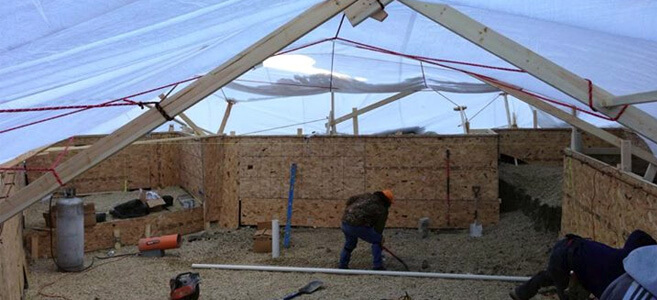
How Is a Concrete Pool Shell Protected in Cold Weather?
Cold-weather concrete work requires planning, not guesswork. The American Concrete Institute’s cold-weather guidance explains that concrete can achieve its intended strength and durability in cold conditions when it is properly produced, placed, cured, and protected from freezing.
For a pool shell, the contractor may use temporary enclosures, vented heat, insulated blankets, temperature monitoring, adjusted mix procedures, and a curing plan. The approach depends on the forecast, site exposure, placement method, and project specifications.
Shotcrete should not be placed against frozen surfaces. The American Shotcrete Association’s cold-weather guidance also notes that protective measures are required when temperatures fall below normal placement conditions.
A professional builder should be willing to pause shell placement when safe, compliant, high-quality work cannot be achieved. Waiting for the correct conditions is better than forcing a critical structural phase simply to maintain a calendar date.
What Are the Benefits of Building an Inground Pool During Winter?
More Time for Thoughtful Design
Winter gives homeowners time to compare custom inground pool designs, evaluate how the pool will relate to the home, and decide which features will provide the most value. That extra planning can prevent expensive changes after excavation has begun.
A Head Start on Permits and Approvals
Chicago and suburban municipalities generally require plans, zoning review, trade coordination, safety barriers, and inspections for inground pools. Requirements vary by municipality, so reviewing Sunset’s guide to Chicago pool permits and zoning can help homeowners understand why approvals should begin early.
A Better Chance of Enjoying More of the Swim Season
Starting sooner may improve the likelihood of an earlier warm-weather completion. Dates still depend on weather, inspections, site conditions, complexity, and homeowner decisions.
What Can Delay Winter Pool Construction in the Chicago Suburbs?
Chicago winters create real constraints that should be addressed honestly. A qualified builder plans around the following factors instead of promising that every day will remain productive:
- Frozen or unstable soil: Excavation may pause when the ground cannot be worked safely or accurately.
- Snow and ice: Crews need safe access, clear work areas, and stable routes for equipment and material deliveries.
- Extreme cold: Concrete, mortar, plumbing, adhesives, and finishes have different temperature requirements.
- Moisture and drainage: Snowmelt, rain, groundwater, and clay-heavy soils can affect excavation and site stability.
- Short daylight hours: Less daylight can reduce the practical work window for certain phases.
- Municipal scheduling: Permit reviews and inspections continue in winter, but holidays, staffing, revisions, and local workload can affect timing.
- Material availability: Specialty tile, coping, equipment, and custom features can influence the sequence regardless of weather.
Winter construction should be treated as a flexible, phase-by-phase process. A weather delay is not automatically a sign that the project is off track; it may show that the builder is protecting the site, materials, and long-term quality of the pool.
When Should You Start If You Want the Pool Ready for Summer?
Homeowners who want to use a new pool during the next summer should begin planning as early as practical. The ideal start depends on design approval, property conditions, local permitting, and project complexity.
| If Your Goal Is… | Recommended Approach |
|---|---|
| A pool as early as possible next season | Begin design, survey review, budgeting, and permits in fall or winter, then allow the builder to sequence construction around conditions. |
| A highly customized pool and spa | Start early enough to make structural, hydraulic, finish, automation, and outdoor-living decisions without rushing. |
| A pool plus major landscaping or hardscaping | Plan the complete backyard together and expect some exterior finish work to wait for suitable spring conditions. |
| More time to manage the investment | Develop the scope and pricing early, then compare cash flow and available pool financing options before construction decisions are due. |
What Should You Ask a Builder About Winter Pool Construction?
Before signing a contract, ask direct questions about how the builder manages cold-weather work:
- Which construction phases can realistically proceed during winter on my property?
- What temperature, ground, snow, or moisture conditions would cause work to pause?
- How will fresh concrete, shotcrete, mortar, plumbing, and the open excavation be protected?
- Who monitors weather conditions and decides whether a scheduled placement should proceed?
- How are temporary heat, enclosures, blankets, snow removal, and site protection handled in the proposal?
- Which parts of the schedule depend on municipal permits and inspections?
- How will decking, landscaping, fencing, and final startup be sequenced if the shell is completed first?
The best answer is not that winter never causes delays. The best answer is a clear process for deciding when work can proceed, how quality will be protected, and how homeowners will be kept informed.
Plan a Winter Pool Project with Sunset Pools & Spas
Sunset Pools & Spas designs and builds custom concrete pools for homeowners throughout Chicago and the surrounding suburbs. The family-owned team manages the project from design and permits through construction, equipment setup, finishes, and final coordination.
With more than 17 years of experience, Sunset understands how to plan around Chicagoland weather without compromising craftsmanship. Explore Sunset’s winter pool construction services and view the custom pool project gallery for examples of completed backyard transformations.
Do not wait for the first warm weekend to begin planning. Contact Sunset Pools & Spas for a free consultation to discuss your property, desired completion window, design ideas, and the most practical construction sequence for your pool.
Winter Inground Pool Construction FAQs
Can you build an inground pool during winter in Chicago?
Yes, an experienced concrete pool builder can construct an inground pool during winter when site conditions and protective measures allow. Design, permits, excavation, steel, plumbing, electrical work, and shell construction may all proceed at different times, while severe cold, snow, frozen ground, or material requirements may cause temporary pauses.
Does building a concrete pool in winter damage the pool shell?
No, winter does not automatically damage a properly placed and protected concrete pool shell. Cold-weather placement requires suitable surfaces, controlled material temperatures, protection from freezing, proper curing, and ongoing monitoring. A qualified contractor should postpone placement when those conditions cannot be maintained.
Is it cheaper to build an inground pool during winter?
Winter construction is not automatically less expensive. Pricing depends on pool size, design, site access, soil, features, equipment, finishes, permits, and the protective measures required for cold-weather work. The main advantage is usually earlier planning and scheduling rather than a guaranteed discount.
When should I start planning if I want my pool ready for summer?
Planning should begin in fall or winter when the goal is to use the pool during the next summer. Early planning creates time for design, budgeting, survey review, permitting, selections, and weather-related schedule adjustments, but no builder can guarantee a completion date without evaluating the property and project scope.
Can it become too cold to continue pool construction?
Yes, severe cold or frozen site conditions can make certain pool construction phases impractical or unsafe. Excavation, shotcrete placement, masonry, decking, and finishes may pause until the builder can meet the required surface, material, curing, access, and safety conditions.
Can pool permits be processed during winter?
Yes, pool design and permit applications can generally move forward during winter. Review time varies by municipality and may be affected by zoning questions, drainage requirements, plan revisions, HOA approvals, trade permits, and inspection scheduling.
Will a winter pool project be completely finished before spring?
A winter pool project may reach major structural milestones before spring, but final completion depends on the weather and project scope. Decking, landscaping, masonry, plaster, startup, and final inspections may be scheduled for warmer or drier conditions even when the shell and underground systems are already complete.