
What Is the Best Depth for an Inground Pool?
When planning a new swimming pool, most homeowners focus on its shape, size, and overall design. But there’s another decision that can make an even bigger difference in how much you enjoy your backyard: pool depth.
So, how deep should an inground pool be? For most families, a pool with a shallow end around 3.5 feet and a deeper area of 4.5 to 5 feet offers an excellent balance of swimming, playing, relaxing, and entertaining. However, the ideal depth depends on how you plan to use your pool, who’s using it, and whether activities like lap swimming or diving are priorities.
With a custom concrete inground pool, you’re not limited to predetermined depth configurations. Sunset Pools & Spas helps Chicago suburban homeowners design custom concrete swimming pools with depths, layouts, and features tailored to their lifestyles.
Key Takeaways: Most family inground pools work well with depths ranging from 3.5 to 5 feet. Shallow areas are ideal for socializing and supervised play, while 4 to 5 feet can accommodate recreational swimming and laps. Diving requires a specially engineered pool with adequate depth, width, length, and clearance. The best design prioritizes usability, safety, and long-term enjoyment.
Pool Depth Options: Which Depth Is Best for Your Needs?
There is no single perfect pool depth. Different activities require different amounts of water, and deeper isn’t necessarily better.
The following table compares common residential pool depth options and their most practical uses.
| Primary Use | Suggested Depth | Best For |
|---|---|---|
| Family swimming | 3.5–5 feet | Families, recreational swimming, and everyday enjoyment |
| Shallow-water play | 3.5–4 feet | Supervised activities, standing, and socializing |
| Pool games and entertaining | Approximately 4–5 feet | Water volleyball, floating, and casual recreation |
| Lap swimming | Approximately 4–5 feet | Fitness, exercise, and recreational lap swimming |
| Non-diving deep end | Approximately 5–6 feet | Deeper recreational swimming and floating |
| Purpose-built diving pool | Engineered to applicable diving standards | Only diving activities specifically supported by the approved design |
These are general design recommendations, not universal safety specifications. Actual depths, floor slopes, and permitted activities should be confirmed with your pool designer and local building authority.
What Is the Best Pool Depth for Families with Kids?
For families, a shallow end of approximately 3.5 feet transitioning to a deeper area around 4.5 or 5 feet is often a practical choice.
This layout gives adults room to stand comfortably in designated areas while preserving water deep enough for swimming as children become older and more confident in the water.
Why a 3.5- to 4-Foot Shallow End Works Well
A shallow end depth of 3.5 to 4 feet can offer several benefits:
- Comfortable standing areas: Many adults can stand and socialize without continuously treading water, although comfort depends on height.
- More usable recreation space: Shallow water supports a variety of supervised pool games and activities.
- Flexibility as children grow: Families can enjoy a layout that works for different swimming abilities over time.
- Easy access to steps and benches: Entry features can be integrated naturally into the shallow portion of the pool.
However, a 3.5-foot shallow end is still deeper than many young children can stand. The best pool depth for kids depends on their height, swimming skills, and individual needs. No water depth should be considered automatically safe for children.
Should Families Consider a Tanning Ledge?
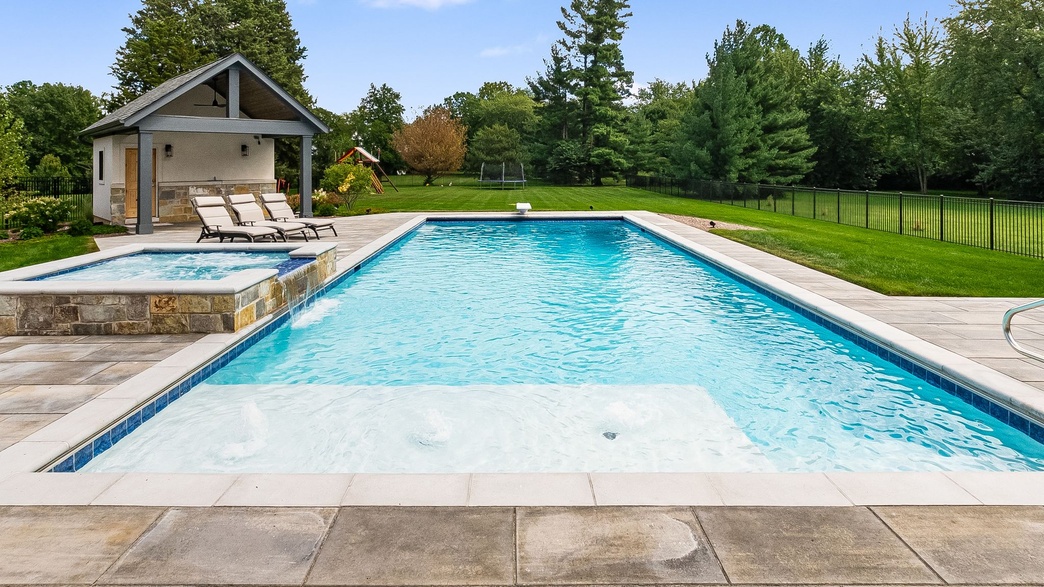
A tanning ledge, also called a Baja shelf or sun shelf, creates a separate shallow-water area within the pool. These features are especially popular in family-oriented designs because they provide space for lounging, cooling off, and supervised water play.
Depending on its intended purpose, a tanning ledge might have approximately 6 to 18 inches of water, although the final depth should be tailored to the design and any in-water furniture.
For homeowners considering this feature, our tanning ledge depth guide explains how to select the right shelf dimensions and water depth.
A tanning ledge isn’t a substitute for active adult supervision. Children can drown in very shallow water, and even strong young swimmers require close attention around a pool. The CDC recommends constant supervision and multiple layers of drowning prevention, including appropriate barriers around residential pools.
Families can also explore our family-friendly swimming pool designs for ideas that combine shallow areas, seating, and recreation space.
What Pool Depth Is Best for Playing Games and Entertaining?
If your vision of the perfect backyard includes summer parties, floating with friends, and games with the family, consider a play pool rather than a traditional deep-end design.
Why 4 to 5 Feet Is Popular for Recreation
A recreational pool with water depths around 4 to 5 feet can provide enough room for swimming while keeping more of the pool usable for standing activities.
Common activities include:
- Water volleyball and other pool games
- Casual swimming and floating
- Socializing with friends and family
- Water-based exercise
- Relaxing along built-in benches or seating areas
One popular configuration is a play pool that gradually deepens toward the middle and becomes shallower again at the opposite end. This creates standing areas on both sides while maintaining a somewhat deeper central section.
Alternatively, a pool with a relatively flat bottom around 4 feet can offer a large, consistent recreational area. The better option depends on the heights, swimming abilities, and preferences of the people who will use it most.
The biggest advantage of a thoughtfully designed play pool is that you’re dedicating more of the available water to the activities you’ll actually enjoy, rather than reserving a large portion of the pool for an infrequently used deep end.
Sunset Pools & Spas can help incorporate these layouts into a variety of custom inground pool designs, including rectangular, geometric, and freeform configurations.
How Deep Should an Inground Pool Be for Swimming Laps?
For recreational lap swimming, a consistent depth of approximately 4 to 5 feet is often sufficient, provided the pool has adequate length and clear swimming space.
In fact, pool length and layout may matter more than additional depth for someone primarily interested in exercise.
Design Considerations for Lap Swimming
If fitness is a major priority, consider the following:
- Consistent water depth: A relatively flat bottom offers a predictable swimming environment.
- Uninterrupted swimming length: A longer, straighter pool allows more strokes between turns.
- Clear swimming lanes: Steps, benches, and tanning ledges should not unnecessarily obstruct the swimming path.
- Adequate turning clearance: Swimmers who perform flip turns should have sufficient room based on their technique and the pool design.
For families that want both fitness and recreation, a rectangular concrete pool can be particularly versatile. It can accommodate lap swimming while still providing room for floating, playing, and relaxing.
Importantly, recreational lap swimming and competitive diving starts are different activities. A pool suitable for laps is not necessarily designed or approved for headfirst entries.
Do You Really Need a Deep End in Your Inground Pool?
A traditional swimming pool often has a shallow end and a noticeably deeper section. But many modern residential pools are designed without an especially deep end.
For homeowners who primarily want to swim, entertain, or relax, a maximum depth of approximately 5 feet can be more useful than a pool that extends to 8 feet or beyond.
When a 5- to 6-Foot Deep End Makes Sense
A 5- to 6-foot deep end can be appealing for households that want a deeper swimming area without building a pool specifically for diving.
It can provide:
- A deeper section for recreational swimming
- More vertical space for floating and treading water
- Some separation between shallow social areas and deeper water
- A traditional shallow-to-deep pool configuration
Keep in mind that many adults cannot comfortably stand in water this deep. A steep transition into deeper water can also reduce usable standing space, so the pool floor must be designed with appropriate slopes and clear transitions.
How Deep Does an Inground Pool Need to Be for Diving?
Diving requires much more than simply choosing a deeper pool.
Some purpose-built diving pools have deep areas around 8 to 9 feet or more, but depth alone does not determine whether a pool is safe for diving. The diving area must also satisfy requirements for its length, width, floor slopes, overhead and underwater clearances, and any installed diving equipment.
The ANSI/PHTA/ICC-5 residential inground swimming pool standard addresses pool construction and design, including specific requirements for diving configurations.
For a residential diving pool, the applicable design requirements depend on factors such as:
- The diving board or platform being considered
- The required minimum diving-water envelope
- Depth measurements at specific locations within that envelope
- Pool width and length
- Bottom slopes and transitions
- Local codes, permits, and equipment manufacturer specifications
A pool that is 8 or 9 feet deep is not automatically suitable for diving. Diving should only be permitted when the entire pool and equipment configuration have been specifically engineered, approved, and designated for that activity.
For families who don’t consider diving essential, choosing a non-diving pool can preserve more shallow recreational space and eliminate the need to accommodate a specialized diving-water envelope.
Safety should remain central to every design decision. Our residential swimming pool safety guide explores additional considerations for protecting family members and guests.
How Does Pool Depth Affect Construction Costs, Heating, and Maintenance?
Pool depth doesn’t just affect how you swim. It can also influence construction requirements and long-term operating expenses.
1. Excavation and Construction
Deeper pools generally require more excavation and potentially more structural materials than shallower pools with otherwise similar dimensions.
Additional depth can also affect engineering, soil removal, drainage planning, and construction complexity. The actual cost difference depends on the property and the specific design.
2. Heating Costs and Water Volume
A deeper pool typically contains more water, assuming the same surface dimensions.
More water generally requires additional energy to raise the pool to a desired temperature. However, actual heating expenses also depend on surface area, weather conditions, wind exposure, equipment efficiency, and how the pool is covered.
For Chicago-area homeowners, efficient heating can be especially important during cooler spring and fall weather.
3. Cleaning and Maintenance
Additional water volume can increase the amount of water treatment required and influence circulation and equipment sizing.
Deeper areas may also make some manual cleaning tasks more challenging. However, maintenance costs depend on many factors beyond depth, including filtration, automation, sanitizer choice, and pool usage.
4. Pool Covers and Efficiency
A properly selected cover can help reduce heat loss and evaporation when the pool isn’t being used. Homeowners interested in convenience and efficiency may want to explore automatic pool cover options early in the design process.
Ultimately, selecting a practical depth configuration can help balance comfort, construction investment, and ongoing operating expenses without compromising your overall design goals.
Choosing the Right Pool Depth for Chicago Suburban Backyards
For homeowners in the Chicago suburbs, the best pool depth should reflect both everyday use and local property conditions.
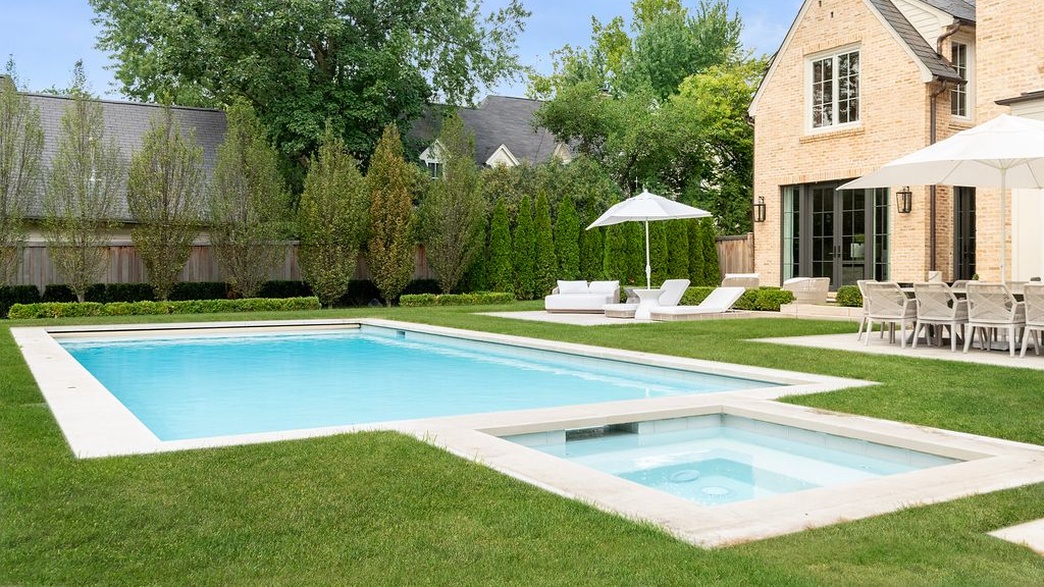
Many suburban homeowners are working with a defined backyard footprint where the pool needs to coexist with patios, landscaping, outdoor dining, and possibly an integrated spa. A large deep end may take up space that could otherwise accommodate a longer shallow swimming area or additional recreational features.
Chicagoland’s seasonal climate is another consideration. A pool that prioritizes practical swimming space, convenient heating, and comfortable lounging areas may better serve families looking to maximize their enjoyment during the outdoor swimming season.
Depth planning should also account for:
- Property dimensions: Smaller lots may limit the space available for long depth transitions.
- Soil and groundwater conditions: Site-specific conditions can influence excavation and structural engineering.
- Municipal requirements: Local permitting, safety, and construction rules can affect the approved design.
- Additional features: Tanning ledges, built-in spas, steps, and benches require careful placement.
- Future usability: Consider how the pool will serve children, teenagers, adult swimmers, and visiting family members over time.
With custom concrete construction, these considerations can be incorporated into the layout rather than forcing the backyard to accommodate a predetermined pool shell.
How to Choose the Best Pool Depth for Your Backyard
Before settling on a final pool depth, it helps to think beyond individual measurements.
Start by asking yourself five questions:
- Who will use the pool most? Young families, adult swimmers, and homeowners who frequently entertain may have different priorities.
- What activities matter most? Swimming laps, floating, water games, and diving have different design requirements.
- How much standing space do you want? A deeper pool may offer less water where adults can comfortably stand and socialize.
- Which features are essential? Entry steps, tanning ledges, benches, and spas can influence the ideal depth layout.
- How will your needs change? Think about how the pool will function five, ten, or fifteen years from now.
There’s no reason to choose an 8-foot deep end simply because traditional pools sometimes include one. Likewise, a uniformly shallow pool may not be the best option for someone who enjoys deeper swimming.
The ideal design is the one that gives your household the greatest amount of functional, comfortable swimming space for its intended activities.
Build a Custom Inground Pool Designed Around Your Lifestyle
Choosing the right pool depth is one of the most important decisions you’ll make when designing an inground swimming pool. The right configuration can make your backyard more enjoyable, improve usability, and support years of family memories.
At Sunset Pools & Spas, we specialize in custom concrete inground pools for homeowners throughout Chicago and the surrounding suburbs. Our experienced team helps guide every stage of the project, from initial design and depth planning through permits and construction.
Whether you’re envisioning a family-friendly pool with generous shallow areas, a modern pool for entertaining, or a lap-friendly design, we’ll help create a layout that works for your property and the way you want to use it.
Explore our custom inground pool project gallery for inspiration, or contact Sunset Pools & Spas to schedule a consultation and start planning your backyard pool.
Inground Pool Depth FAQs
What is the best depth for a family inground pool?
For many families, an inground pool with a shallow end around 3.5 feet and a deeper section of approximately 4.5 to 5 feet is a practical choice. This configuration balances recreational swimming, adult standing areas, and supervised family activities. The ideal layout depends on swimmers’ heights and abilities.
What is the standard shallow end depth for an inground pool?
A shallow end around 3.5 to 4 feet is a common design choice for residential inground pools. This range gives many adults comfortable standing space while accommodating swimming and recreational activities. Actual dimensions should reflect the pool’s intended use and applicable design requirements.
Is a 4-foot-deep pool too shallow?
No, a 4-foot-deep pool can be excellent for recreational swimming, water games, exercise, and socializing. A consistent 4-foot depth can make much of the pool usable for standing activities, although shorter swimmers may find the water too deep to stand comfortably. It is not a diving pool.
Is a 5-foot-deep pool good for families?
Yes, a 5-foot maximum depth can work well for family pools when paired with appropriately designed shallower areas. It offers room for recreational swimming without requiring a traditional 8-foot deep end. However, many children and some adults cannot stand comfortably in 5 feet of water.
Do you need a deep end in an inground pool?
No, an inground pool does not need a traditional deep end to provide an excellent swimming experience. Many homeowners prefer shallow-to-moderate depths because they preserve more usable space for swimming, playing, and entertaining. Diving requires a separate, purpose-built design.
How deep should an inground pool be for diving?
A diving pool must meet the required diving-water envelope for its approved configuration, not just a single minimum depth. Some purpose-built designs have deep areas around 8 to 9 feet or more, but the necessary dimensions depend on pool geometry, diving equipment, manufacturer instructions, and applicable standards. Depth alone never establishes diving safety.
Does a deeper inground pool cost more to heat?
A deeper pool generally requires more energy to heat because it contains more water when other dimensions are equal. Actual heating costs depend on the heater, weather, desired temperature, pool surface area, insulation conditions, and cover usage. Depth is one of several factors affecting long-term operating expenses.
