
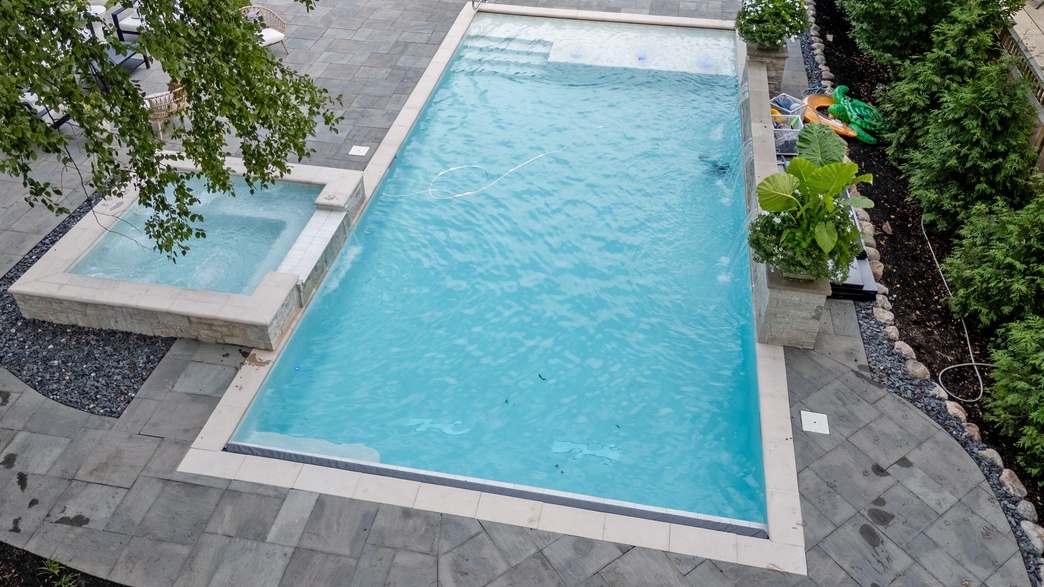
Choosing the Right Pool Coping for Your Chicago Suburbs Backyard
Pool coping frames the water, creates a comfortable edge, and faces years of summer sun, moisture, and Chicago-area winters. A beautiful installation is only half the decision: long-term appearance matters too.
When comparing pool coping options best for Chicagoland homes, consider Valders, sandstone, granite, and bluestone alongside porcelain and concrete pavers. Sunset Pools & Spas evaluates coping as part of every custom concrete pool design.
Key Takeaways
Valders stone is Sunset Pools & Spas’ premium coping recommendation for its density and performance in the Midwest climate, though it is expensive. Sandstone, granite, and bluestone are Sunset’s standard natural-stone selections. The company generally avoids Indiana limestone because of recurring discoloration concerns, especially around saltwater pools. Concrete pavers are the budget choice but can show scratches and chips more readily.
What Is Pool Coping, and Why Is It Important?
Pool coping is the cap installed along the top perimeter of an inground swimming pool. It creates a finished transition from the concrete pool shell to the surrounding patio or deck. It also affects comfort, wet-surface traction, and how the pool’s tile, waterline, and hardscape fit together.
Coping borders the water; decking forms the larger patio. They can coordinate without matching exactly. See Sunset’s pool deck and coping renovation services.
Which Pool Coping Options Are Best for Chicagoland Homes?
The table reflects Sunset’s experience building custom pools in the Chicago suburbs, with porcelain included as an additional option to evaluate.
| Material | Best Fit | Sunset’s Perspective | Main Trade-Off |
|---|---|---|---|
| Valders stone | Premium, long-term natural-stone choice | Top coping recommendation; dense Wisconsin stone well suited to the regional climate | Very high cost |
| Sandstone | Warm, natural colors and varied designs | One of Sunset’s standard coping options | Durability and absorption vary by stone source |
| Granite | Durable, refined stone with multiple color options | One of Sunset’s standard coping options | Finish and color affect traction and surface temperature |
| Bluestone | Classic blue-gray character and texture | One of Sunset’s standard coping options | Natural variation and darker surface temperatures |
| Outdoor porcelain | Contemporary design and low routine upkeep | An additional option to evaluate by product and installation system | Requires compatible coping pieces and precise installation |
| Concrete pavers | Lower initial cost and coordinated patios | Budget coping option | Some decorative surface finishes reveal underlying concrete if chipped or scratched |
| Indiana limestone | Classic light-colored appearance | Previously popular, but no longer recommended by Sunset based on recent quality concerns | Moisture-related discoloration; particularly discouraged for saltwater pools |
Any choice still requires suitable product specifications, drainage, and installation.
Valders Pool Coping: Sunset’s Premium Recommendation
Valders is Sunset Pools & Spas’ preferred premium pool coping material for Chicago-area properties. Quarried in Wisconsin, Valders is a high-density dolomitic limestone with an attractive natural appearance and a performance profile particularly well suited to demanding seasonal conditions.
The manufacturer confirms the stone’s density and coping applications in Eden-Valders quarry information.
“It’s a natural stone out of Wisconsin that is very dense so it holds up well in our climate.”
Its principal drawback is cost: Nick describes Valders as extremely expensive. It is a premium upgrade, not Sunset’s default selection.
Sandstone, Granite, and Bluestone: Sunset’s Standard Pool Coping Options
Sandstone, granite, and bluestone are Sunset’s standard coping selections. All three are available in a wide range of looks and have performed reasonably well across the company’s projects when appropriate stone products are used.
Sandstone Pool Coping: Warmth and Natural Variation
Sandstone offers tan, buff, gray, and other earthy tones suited to landscaped, traditional, or relaxed poolscapes.
Its absorption and weathering vary by quarry. Specify a stone rated for exterior freeze-thaw exposure.
Granite Pool Coping: A Strong, Refined Natural-Stone Option
Granite offers refined natural-stone character in both light and dark tones, complementing traditional or modern pools.
Choose a textured wet-use finish rather than polished granite. Dark colors can get hot in direct sunlight.
Bluestone Pool Coping: Character and Architectural Appeal
Bluestone pool coping is a popular choice for homeowners seeking a naturally varied, blue-gray or charcoal-toned border. Depending on the stone, bluestone may also contain warmer rust, tan, and gray accents.
Compare thermal and natural-cleft finishes for wet traction, comfort, and consistency using physical samples.
Why Sunset No Longer Recommends Indiana Limestone Pool Coping
Indiana limestone has a beautiful, classic appearance, but Sunset Pools & Spas no longer recommends it as a go-to coping material. Although it was once one of the company’s most frequently used products, Nick has observed repeated quality and discoloration issues in recent years.
Moisture absorption can contribute to color changes and mineral deposits, as discussed in Polycor’s limestone care guidance.
In Sunset’s experience, some quarry-described normal discoloration can take one to three years to dissipate. That is too long for clients expecting a newly installed pool to look finished immediately. This is a project observation, not a guarantee that staining always disappears.
Sunset does not recommend Indiana limestone for saltwater pools. This reflects its experience, not a claim that every limestone fails. Dense Valders limestone and Indiana limestone are different products and should not be treated alike.
Porcelain Pool Coping: A Modern Alternative
Exterior-rated porcelain pool coping may appeal to homeowners who want modern lines, consistent color, and relatively simple cleaning. Many products mimic stone or concrete while offering low water absorption.
Porcelain is an alternative, not one of Sunset’s standard choices. Select freeze-thaw-rated, textured coping with compatible edge units, such as purpose-made Daltile pool coping and trim.
Its support, drainage, setting materials, and movement joints need precise installation.
Concrete Paver Pool Coping: Lower Cost With Appearance Trade-Offs
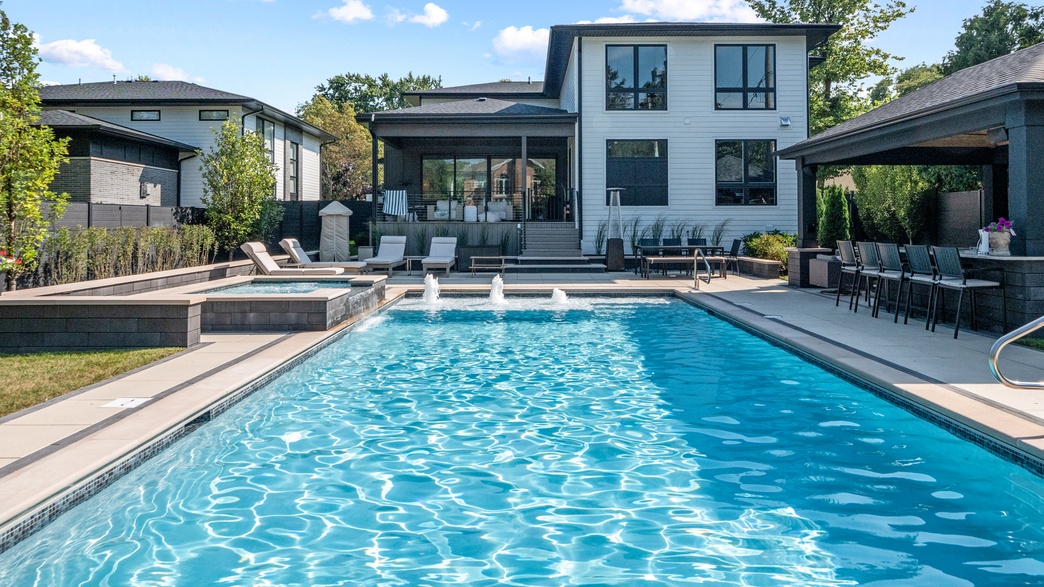
Concrete pavers are Sunset’s budget pool coping option. They offer a range of shapes, colors, and profiles, and their initial appearance can be very attractive, especially when coordinated with a matching patio.
With some decorative pavers, color or texture is concentrated near the surface. Deep scratches and chips can expose the underlying concrete, making wear more visible at the pool edge.
Not all pavers are built alike; some have integral color. Examine the actual unit and its cut edge before selecting a product.
Pavers can still be practical for the surrounding patio even when stone is preferred at the pool edge. See Sunset’s pool decking material comparison.
How Does Chicago’s Freeze-Thaw Climate Affect Pool Coping?
Water entering pores and joints can contribute to cracking, loose coping, or surface wear during repeated freezing and thawing.
Freeze-thaw performance depends on both material selection and installation. Dense stone also needs good drainage, support, and movement joints.
Five Things to Ask Your Pool Builder
- Is this specific product suitable for freeze-thaw exposure? Request information about the exact stone, paver, or porcelain unit rather than relying on a broad material name.
- What happens to water at the coping and deck joints? Proper slopes, drainage, and sealing details help prevent trapped moisture.
- How will movement be accommodated? A pool and adjacent deck can move differently as temperatures and ground conditions change.
- Will the edge be comfortable and secure when wet? Evaluate textures, edge shapes, and barefoot comfort using real samples.
- What maintenance is required? Ask about approved cleaners, sealing where appropriate, and restrictions on salt-based deicers or other chemicals.
Which Pool Coping Material Should You Choose?
Start with the look, initial cost, and appearance you expect the coping to maintain.
| If Your Priority Is… | Start With… | Why |
|---|---|---|
| Sunset’s premium natural-stone recommendation | Valders stone | Dense Wisconsin stone that Sunset favors for Chicagoland conditions |
| A proven standard choice with natural color variety | Sandstone, granite, or bluestone | Sunset regularly uses these options across its pool projects |
| Blue-gray stone with natural character | Bluestone | Distinctive texture and color variation |
| Modern lines and low routine sealing | Exterior-rated porcelain | Consistent appearance and low-absorption products, subject to installation suitability |
| The lowest-cost coping category among these choices | Concrete pavers | Budget-friendly initial installation, with possible visible wear to decorative finishes |
| A saltwater pool and long-term appearance | Discuss Valders or Sunset’s standard stones | Sunset specifically discourages Indiana limestone for saltwater pools |
Coordinate coping with the home, tile, and interior pool finish. Explore Sunset’s custom pool project gallery for complete backyard examples.
How Much Does Pool Coping Cost in the Chicago Suburbs?
Installed pricing depends on material, perimeter, curves, thickness, edge profile, access, and demolition. Complex spas or curved pools require more cutting.
Concrete pavers are Sunset’s budget choice; sandstone, granite, and bluestone are standard; Valders is an expensive premium option. Porcelain costs vary, and Sunset no longer recommends Indiana limestone.
For replacements, inspect the bond beam, tile, and deck first. Sunset’s pool remodeling guide explains broader upgrade considerations.
Get Expert Guidance on Pool Coping From Sunset Pools & Spas
The best coping balances appearance, comfort, climate suitability, and how the material ages—not just its showroom finish.
Sunset Pools & Spas is a family-owned custom concrete pool builder serving Chicago-area homeowners, helping clients compare materials during design and renovation.
Request a free consultation with Sunset Pools & Spas to discuss coping for your new or existing inground pool.
Pool Coping FAQs for Chicago Suburbs Homeowners
What is the best pool coping material for Chicago winters?
Valders is Sunset’s top premium coping recommendation for the Chicago climate. Sandstone, granite, and bluestone are its standard options when specified and installed appropriately.
Is Valders stone different from Indiana limestone?
Yes. Valders is a high-density dolomitic limestone from Wisconsin. Sunset favors Valders but reports recurring moisture-related discoloration with Indiana limestone.
What coping materials does Sunset Pools & Spas normally use?
Sunset’s standard coping choices are sandstone, granite, and bluestone. These stones provide varied colors and have performed reasonably well in its projects.
Is Indiana limestone coping good for a saltwater pool?
No. Sunset does not recommend Indiana limestone coping for saltwater pools based on its experience with discoloration and appearance concerns.
How long can Indiana limestone discoloration last?
Some Indiana limestone discoloration has taken one to three years to dissipate on Sunset’s projects. Results vary, and disappearance is not guaranteed.
Do concrete paver coping pieces show chips and scratches?
Yes, some decorative pavers reveal a different concrete core when chipped or scratched. Check whether the chosen product uses surface-only color or integral color.
Can porcelain pool coping withstand Chicago winters?
Yes, properly installed exterior-rated porcelain coping can withstand Chicago winters. Confirm freeze-thaw resistance, wet-use texture, compatible trim, and appropriate installation details.
What is the most budget-friendly pool coping option?
Concrete pavers are generally Sunset’s budget coping option. Balance the initial savings against potential visible wear in decorative finishes.
